Into the Transceiver-Verse Part III: 3 Techniques to Push Data Rates Further
In the first two blogs of our “Into the Transceiver-verse” series, we talked about how to choose the right transceivers for your application and summarized

In the first two blogs of our “Into the Transceiver-verse” series, we talked about how to choose the right transceivers for your application and summarized

Climate change affects all of us. From severe storms to rising sea levels, climate change is shaping not only how we live our personal lives,

Driven by demands for miniaturization, increased bandwidth, lower power consumption and greater link budgets, transceivers have evolved immensely and rapidly over the past 25 years.
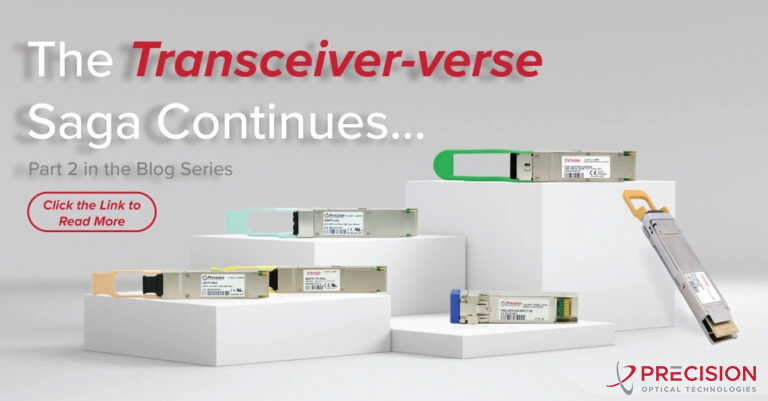
In the first blog of our Into the Transceiver-verse series we focused on the 6 questions you need to ask when selecting transceivers for your

Life’s not easy for the world’s optical network engineers. The MSOs, carriers, data centers and other network/service providers they work for are continuing to invest


Fronthaul, backhaul, midhaul, xHaul transport — these are just some of the words keeping network engineers responsible for 5G deployments up at night. With carriers,

There are hundreds of different types of optical transceivers! It’s no wonder selecting the right transceivers for your network applications may seem a daunting task.
The question of designing and rolling out 5G networks can be sliced a myriad of ways, from focusing on small cell architecture and open RAN
As 2021 came to a close, the impacts of COVID still remained and continue to impact our world today. As 2021 came to a close,